For anyone involved in cryptocurrency mining, understanding ASIC miner efficiency is not just an academic exercise; it is the cornerstone of sustained profitability. In an industry defined by competition and fluctuating market conditions, every joule of electricity and every terahash of computational power counts. This article provides a comprehensive, practical guide to understanding, evaluating, and optimizing ASIC miner efficiency, focusing directly on its impact on your bottom line and operational expenses.
What is ASIC Miner Efficiency and Why It Matters
It is a measure of how much power a miner consumes to produce a given amount of hashing power. An inefficient miner, while potentially having a high hashrate, might consume so much power that its electricity bill erases any potential profits, especially during periods of lower cryptocurrency prices or increased network difficulty.
Understanding the Key Metric: Joules per Terahash (J/TH)
A lower J/TH value indicates better efficiency. For example, a miner rated at 20 J/TH is twice as efficient as a miner rated at 40 J/TH, meaning it consumes half the electricity to produce the same amount of hashing power.
How to Calculate and Interpret ASIC Miner Efficiency
The formula is: Efficiency (J/TH) = Power Consumption (Watts) / Hashrate (Terahashes per second). In early generations of ASIC miners, J/TH figures were often in the hundreds.
Factors That Influence ASIC Miner Efficiency
Overclocking, for example, might increase hashrate but often at a disproportionately higher increase in power consumption, negatively impacting efficiency. ASIC chips perform optimally within specific temperature ranges.
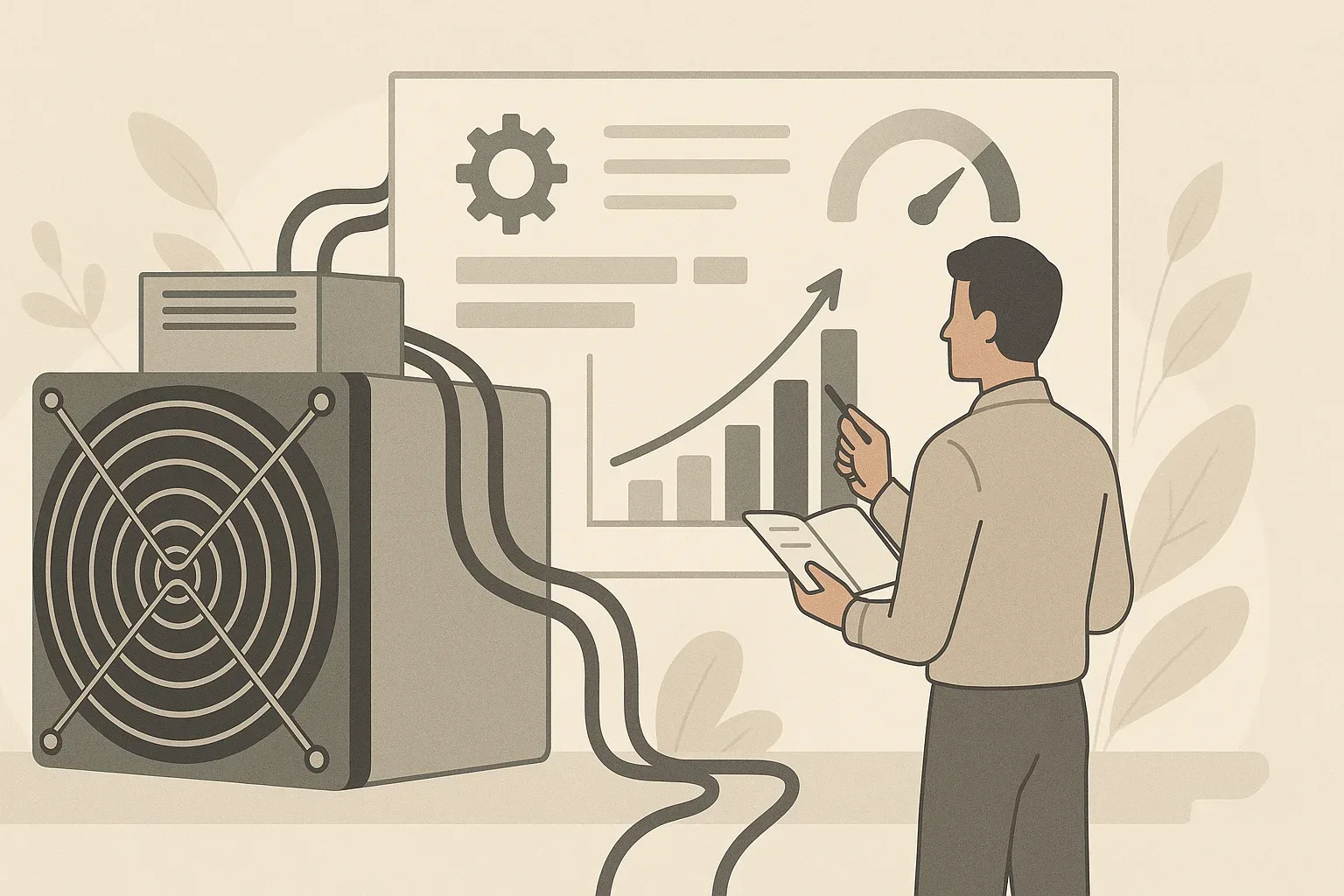
The Direct Link Between Efficiency and Mining Profitability
A miner's J/TH rating directly translates into its power consumption for a given hashrate. The 20 J/TH miner will consume 2000 Watts (2 kW), while the 30 J/TH miner will consume 3000 Watts (3 kW). Over a month, running 24/7, with an electricity cost of $0.05 per kWh, the more efficient miner costs $72 per month in electricity, while the less efficient one costs $108.
Comparing Efficiency Across Different ASIC Models and Generations
When comparing across different models, always prioritize the J/TH value over the absolute hashrate. For instance, an Antminer S19 Pro (approx. 29.5 J/TH) is less efficient than an Antminer S21 (approx. 17.5 J/TH), even if an S19 Pro has a competitive hashrate with a few S21 units. The S21 will have a lower operational cost per terahash.
Practical Tips for Optimizing Your ASIC Miner's Efficiency
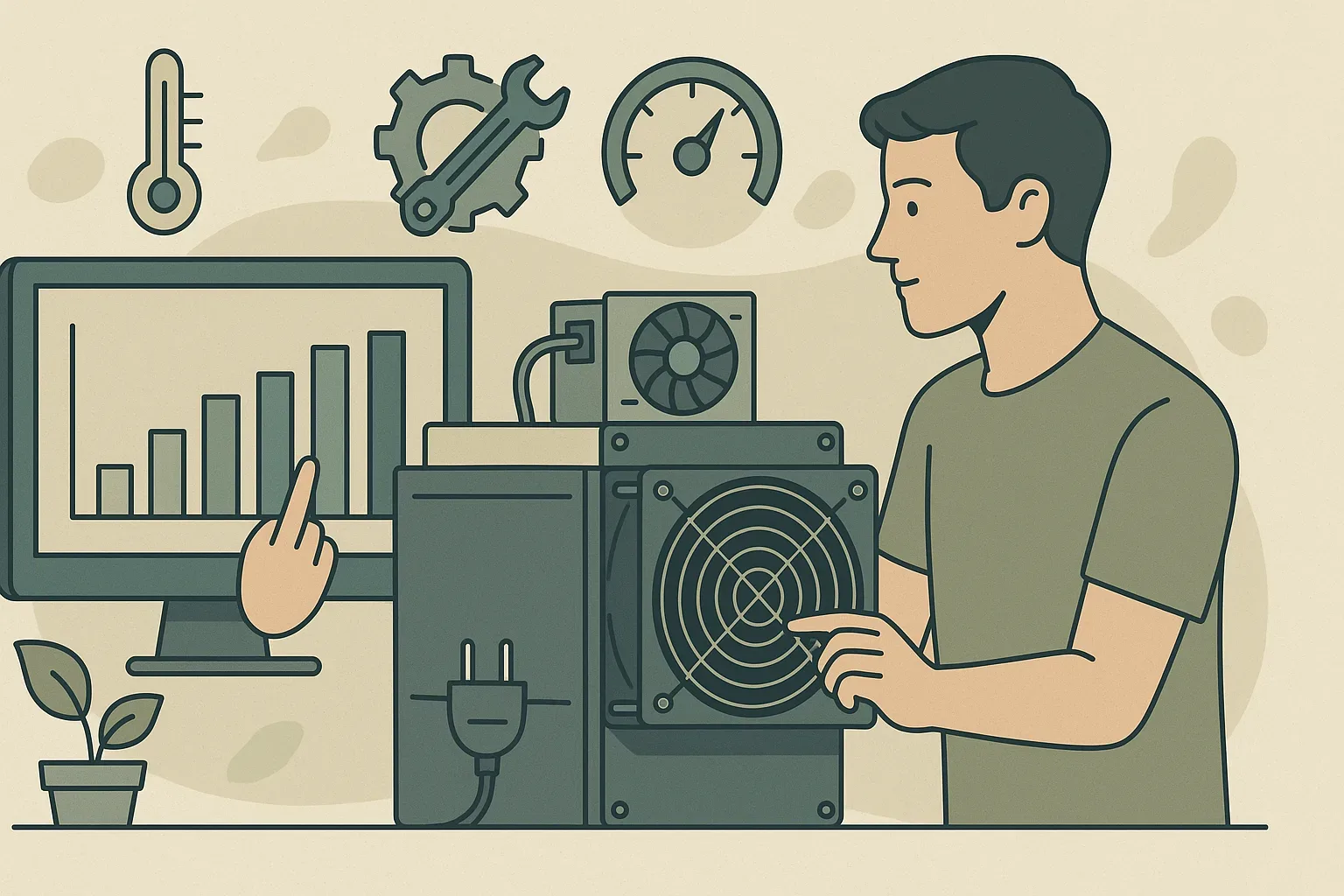
Second, keep your firmware updated. Manufacturers often release updated firmware that includes performance optimizations, bug fixes, and sometimes even efficiency improvements. Regularly checking for and applying these updates can unlock better performance. Third, ensure a stable and clean power supply. Voltage fluctuations or 'dirty' power can cause instability and reduce efficiency. Using high quality PSUs and potentially power conditioners can mitigate these issues. Cleaning dust from fans, heatsinks, and intake vents ensures unimpeded airflow and prevents overheating. Dust acts as an insulator, trapping heat and forcing fans to work harder. Finally, carefully consider overclocking or underclocking. While overclocking might increase hashrate, it almost always decreases efficiency (higher J/TH) due to disproportionately increased power draw. Conversely, underclocking might reduce your hashrate but could lead to slightly better J/TH, making it more efficient for certain scenarios, especially when electricity costs are very high. Experiment with these settings if your miner's firmware allows for it, monitoring both hashrate and power consumption carefully.
The Future of ASIC Miner Efficiency: Trends and Innovations
The relentless pursuit of greater efficiency continues to drive innovation in the ASIC mining industry. Several key trends and innovations are shaping the future of ASIC miner efficiency. Firstly, advancements in semiconductor technology, particularly the shift to smaller process nodes (e.g., 3nm and beyond), promise even greater density and lower power consumption per hash. This miniaturization is the bedrock of continued J/TH improvements. Secondly, sophisticated power management and thermal regulation systems are becoming increasingly important. AI and machine learning are being explored to dynamically adjust voltage and frequency based on real-time operating conditions, optimizing efficiency on the fly. Thirdly, alternative cooling technologies like immersion cooling and liquid cooling are moving from niche applications to more mainstream adoption, particularly for large-scale operations. These methods offer superior heat dissipation, allowing chips to operate more stably and efficiently at higher densities. Fourthly, there is a growing focus on sustainability and energy recovery. Innovations in waste heat recapture are emerging, where the heat generated by miners is used for other purposes, such as heating buildings or greenhouses, effectively reducing the net energy cost of mining. Finally, the integration of modular and upgradeable components might allow miners to replace specific parts, like hashing boards, with newer, more efficient versions without having to replace the entire unit, extending the useful life and improving the overall efficiency profile of mining farms.
Conclusion
ASIC miner efficiency, measured by Joules per Terahash, is the single most critical factor for sustainable profitability in cryptocurrency mining. It dictates operational costs, directly impacts your return on investment, and determines your resilience against market fluctuations. By understanding this key metric, meticulously evaluating different models, and implementing practical optimization strategies like proper cooling, firmware updates, and stable power, miners can significantly enhance their operations. As technology continues to advance, the drive for greater efficiency will remain at the forefront, shaping the future of the entire mining ecosystem and ensuring that only the most optimized operations thrive in the long term.