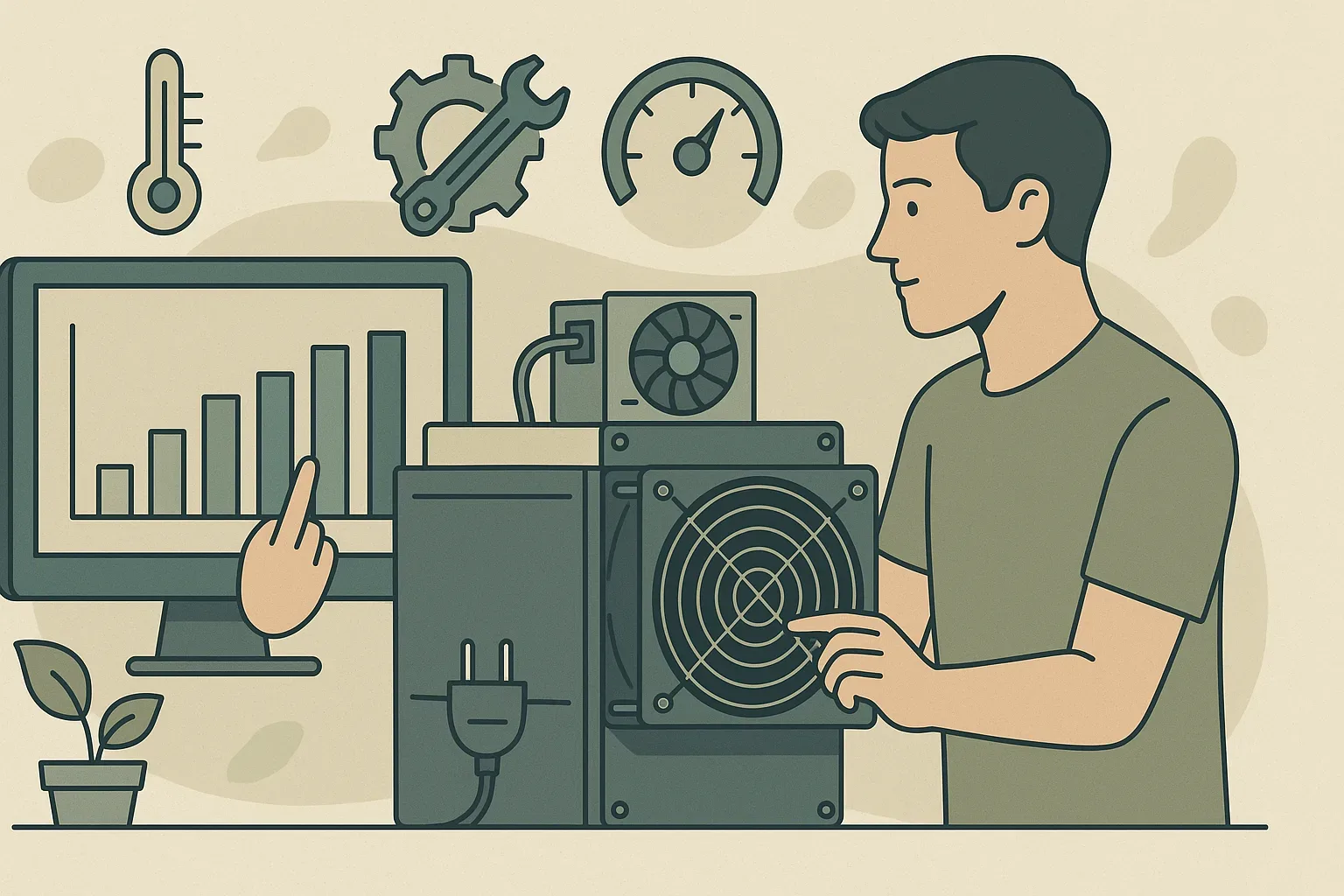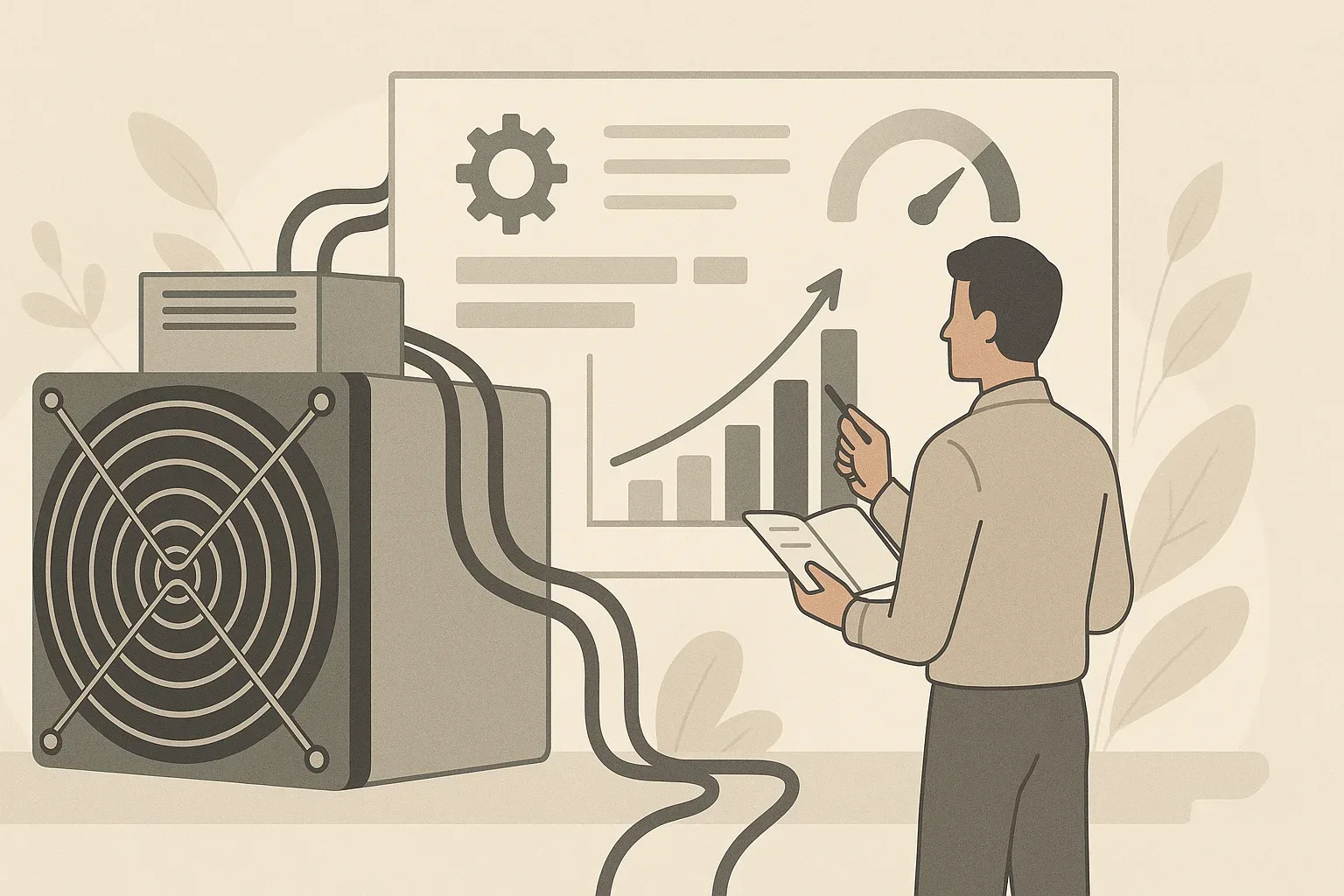
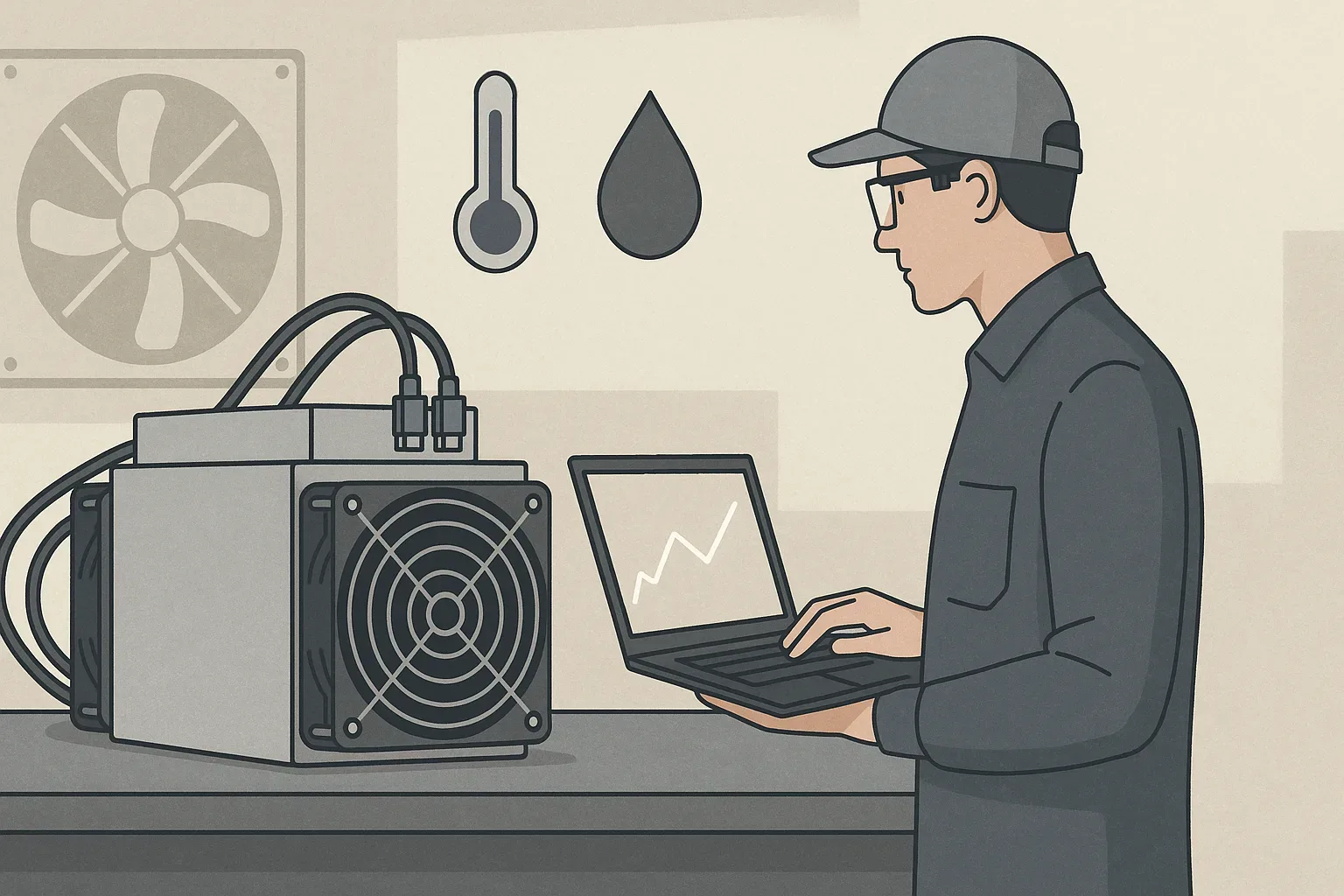
For anyone engaged in cryptocurrency mining, understanding and meticulously controlling the operating environment of your Application-Specific Integrated Circuit (ASIC) miners is not merely a recommendation; it is a critical differentiator between consistent profitability and significant losses. This guide provides a comprehensive, actionable walkthrough for establishing and maintaining optimal ASIC miner operating conditions to maximize efficiency, lifespan, and profitability while minimizing common risks. By focusing on practical strategies for temperature, humidity, power, ventilation, and cleanliness, miners can safeguard their investments and ensure their operations run at peak performance.
Understanding ASIC Miner Operating Conditions: Why They Matter
ASIC miners are purpose-built machines designed to perform extremely intensive computational tasks, generating significant heat in the process. Their highly specialized components are sensitive to environmental factors, and deviations from optimal operating conditions can have profound negative consequences. The most immediate impact is on performance: miners will throttle their hashrate or even shut down if temperatures exceed safe limits, directly reducing your mining output and therefore your revenue. Prolonged exposure to sub-optimal conditions accelerates wear and tear, leading to premature component failure and a shortened lifespan for your expensive hardware. This translates to increased maintenance costs, more frequent hardware replacements, and significant downtime, all of which erode profitability. A thorough understanding of these conditions, often detailed in an ASIC miner's spec sheet, is the foundation for a resilient and profitable mining operation. For a deeper dive into what these numbers mean, consider reading our guide on how to read an ASIC miner spec sheet: https://miningpluscrypto.com/blog/how-to-read-an-asic-miner-spec-sheet.
Temperature Control: The Cornerstone of ASIC Longevity and Efficiency
Persistently high temperatures drastically shorten the lifespan of components like capacitors, power delivery modules, and the ASIC chips themselves. Effective temperature control involves a multi-pronged approach. Monitoring temperature with reliable sensors at the intake and exhaust points of your mining facility is essential for real-time adjustments and maintaining stability.
Humidity Management: Protecting Your Hardware from Corrosion and Shorts
High humidity (above 70%) can lead to condensation forming on internal components, particularly during temperature fluctuations or when power cycling. Over time, it fosters the growth of conductive dust and grime, further exacerbating short-circuit risks. This can be achieved through dehumidifiers in humid environments, humidifiers in excessively dry ones, and ensuring proper airflow to prevent pockets of stagnant, moisture-laden air.
Stable Power Supply: Voltage, Amperage, and Surge Protection Essentials
ASIC miners are power-hungry devices, drawing substantial amperage continuously. Unstable power can lead to intermittent shutdowns, errors in hashing calculations, and premature failure of power supply units (PSUs) and hashboards. Chronic undervoltage starves the miner of necessary power, causing instability, while overvoltage can fry sensitive circuits.
Optimizing Ventilation and Airflow for Effective Heat Dissipation
Effective airflow is the primary mechanism for heat dissipation in most air-cooled ASIC mining setups. Without it, even the best ambient temperature control will fail. Miners themselves are designed with internal fans to move air across the hashboards, but these rely on a constant supply of appropriately cool air. Optimal setup involves:
- Leave adequate space for air intake and exhaust. 2. Clear Air Pathways: Ensure there are no obstructions blocking the intake or exhaust ports of the miners or the room's ventilation system. 3. In larger setups, negative pressure might be used to ensure hot air exits effectively. 4. 5. Fan Selection: Use industrial-grade fans with appropriate static pressure ratings to move air through filters and ducting. For more on maximizing your miner's output, check out our guide on optimizing ASIC miner performance: https://miningpluscrypto.com/blog/optimizing-asic-miner-performance.
Dust and Particulate Control: Maintaining Internal Cleanliness
Over time, these particles accumulate inside the miner's chassis, coating heat sinks, fans, and circuit boards. Air Filtration: Install high-efficiency air filters (MERV 8 to MERV 13) at all air intake points for your mining facility. These filters should be regularly inspected and replaced or cleaned. 2. Sealed Environment: Minimize open pathways for dust entry by sealing gaps around doors, windows, and cable entries. 3. Regular Cleaning: Implement a schedule for external cleaning of miners, typically using compressed air or a low-static vacuum cleaner. Never use a standard household vacuum, as it can generate static electricity. Internal cleaning should only be performed by experienced personnel when absolutely necessary, often during maintenance checks, with proper ESD precautions. 4. Surface Maintenance: Keep the mining area floor and surfaces clean to reduce the amount of dust available to become airborne.
Noise Mitigation Strategies for ASIC Mining Operations
ASIC miners are inherently loud machines due to their high-speed cooling fans. Noise levels can easily exceed 70-80 decibels per miner, making residential or mixed-use placements challenging and potentially leading to noise complaints or hearing damage. Mitigating noise requires careful planning:
- Dedicated Mining Space: The ideal solution is a purpose-built facility or a dedicated room specifically designed for noise containment, away from living or working areas. 2. Soundproofing: Insulating walls, ceilings, and doors with sound-absorbing materials (acoustic foam, mass loaded vinyl) can significantly reduce noise transmission. 3. Enclosures: Constructing soundproof enclosures or "miner boxes" for individual or small groups of miners can be effective. These need to be carefully designed to maintain airflow and prevent heat buildup within the enclosure itself. 4. Ducting and Mufflers: Directing exhaust air through insulated ducting can reduce airborne noise. Acoustic mufflers or silencers can be installed in the ductwork. 5. Fan Management: Utilizing variable speed fans allows for reducing fan speed (and thus noise) when thermal conditions permit, though this must be balanced against cooling requirements. Immersion cooling systems, by eliminating air cooling entirely, offer the most significant reduction in noise.
Environmental Monitoring: Tools and Best Practices for Constant Oversight
Relying on guesswork or infrequent checks is a recipe for disaster. Essential tools and sensors include:
- Temperature Sensors: Digital thermometers with remote monitoring capabilities, strategically placed at air intake, exhaust, and within the mining room, are vital. Many miners also provide internal temperature readings (chip temperature, board temperature) via their web interface. 2. Humidity Sensors (Hygrometers): Integrated into environmental monitoring systems, these track relative humidity to prevent condensation or static issues. 3. Airflow Sensors/Anemometers: While less common for small setups, these can be useful in larger operations to ensure adequate air movement. 4. Power Meters: Smart PDUs or inline power meters track real-time power consumption, allowing you to identify inefficiencies or power fluctuations. 5. Smoke and Fire Detectors: Essential safety devices, integrated into an alarm system. 6. Remote Monitoring Software: Many ASIC manufacturers provide software or web interfaces to monitor miner status, hashrate, and internal temperatures. Third-party mining management software can aggregate data from multiple miners and environmental sensors, offering centralized control and alerts. Best practices involve establishing thresholds for all monitored parameters. When a threshold is exceeded (e.g., ambient temperature too high, humidity out of range), an alert system (email, SMS) should notify operators immediately, allowing for prompt intervention before hardware damage or performance degradation occurs. Regular data logging and analysis can help identify trends and optimize environmental controls over time.
What are the ideal temperature and humidity ranges for different ASIC miner models?
The ideal temperature and humidity ranges for ASIC miner models can vary, but general guidelines apply across most air-cooled units. Typically, manufacturers recommend an ambient operating temperature range of 5°C to 35°C (41°F to 95°F). Some newer or higher-end models might tolerate slightly higher temperatures, but operating near the upper limit consistently can still reduce lifespan. The key is to check the specific miner's spec sheet for its rated operating conditions. For humidity, the generally recommended range is between 30% and 60% relative humidity. Going below 30% increases the risk of static electricity, while exceeding 60-70% significantly raises the risk of condensation and corrosion. Always consult the official specifications for your particular ASIC model, as deviations can lead to warranty invalidation and hardware failure. Our guide on how to read an ASIC miner spec sheet provides more detail on interpreting these critical figures: https://miningpluscrypto.com/blog/how-to-read-an-asic-miner-spec-sheet.
How does unstable power affect ASIC miner performance, lifespan, and what protective measures are necessary?
Unstable power, characterized by voltage fluctuations, sags, spikes, or interruptions, has several detrimental effects on ASIC miner performance and lifespan. Performance can suffer immediately through reduced hashrate, intermittent errors, and frequent reboots or shutdowns, directly impacting profitability. Over time, unstable power accelerates the degradation of internal components, particularly power supply units (PSUs), capacitors, and the ASIC chips themselves, leading to premature hardware failure and costly replacements. To protect against these risks, several measures are necessary. Firstly, ensure your electrical infrastructure is adequately rated and properly grounded. Thirdly, install robust surge protectors at all critical points to absorb voltage spikes. Finally, for environments prone to minor fluctuations or brief outages, Uninterruptible Power Supplies (UPS) can provide stable power and enable graceful shutdowns, preventing abrupt power cuts that stress components.
What are the most effective strategies for ensuring proper airflow and heat dissipation in an ASIC mining setup?
Ensuring proper airflow and heat dissipation in an ASIC mining setup relies on a combination of strategic layout and active ventilation. The most effective strategies include: establishing a clear cold aisle/hot aisle segregation to prevent hot exhaust air from recirculating into miner intakes; maintaining adequate spacing between miners to allow for unimpeded airflow; utilizing powerful, high static pressure intake and exhaust fans to create a strong "push-pull" ventilation system; and, for larger operations, implementing ducting to directly channel hot air from miner exhausts out of the facility. Air filters at intake points prevent dust buildup, which otherwise obstructs airflow. For high-density setups, advanced solutions like immersion cooling offer superior heat dissipation by submerging miners in dielectric fluid, eliminating the need for extensive air cooling altogether.
How can miners prevent dust accumulation and other environmental contaminants from damaging their ASICs?
Miners can prevent dust accumulation and other environmental contaminants from damaging their ASICs through a multi-layered approach focused on exclusion and regular maintenance. Key strategies include: installing high-efficiency air filters (e.g., MERV 8-13) at all air intake points of the mining facility and maintaining a regular schedule for filter replacement or cleaning; sealing any gaps, cracks, or openings in the building envelope to minimize ingress of dust and particulates; maintaining a clean mining environment by regularly sweeping or vacuuming floors and surfaces (using a low-static vacuum); and performing external cleaning of ASICs with compressed air or specialized dust blowers on a scheduled basis. Some miners opt for dust-resistant enclosures or even immersion cooling to completely isolate their ASICs from airborne contaminants.
What essential tools and sensors are needed to effectively monitor ASIC miner operating conditions?
To effectively monitor ASIC miner operating conditions, a miner needs a suite of essential tools and sensors. Foremost are temperature sensors (digital thermometers with remote monitoring) placed at air intake, exhaust, and ambient room locations. Humidity sensors (hygrometers) are critical for tracking moisture levels. For power stability, smart PDUs or inline power meters provide real-time voltage, amperage, and power consumption data. Internally, most ASICs offer diagnostic information via their web interface, including chip and board temperatures, fan speeds, and hashrate. Beyond these, remote monitoring software or mining management platforms are invaluable for aggregating data from multiple miners and environmental sensors, setting alerts for out-of-spec conditions, and providing historical data for analysis. Finally, for safety, smoke detectors and fire alarms are non-negotiable.
What are the common risks associated with poor operating conditions and how can they be mitigated?
Poor operating conditions for ASIC miners present several common and significant risks, all of which ultimately impact profitability and hardware longevity. Reduced Performance and Hashrate: Overheating causes miners to throttle, lowering output. Mitigation: Implement robust temperature control and optimized airflow as detailed in earlier sections. 2. Premature Hardware Failure: High temperatures, voltage instability, and dust accelerate component wear. Mitigation: Maintain stable power, effective cooling, and rigorous dust control. 3. Increased Energy Consumption: Overheating can make miners less efficient, consuming more power for less work. Mitigation: Ensure efficient heat dissipation and monitor power draw. Our guide on ASIC miner efficiency explains more: https://miningpluscrypto.com/blog/asic-miner-efficiency-explanation. 4. Mitigation: Manage humidity, control dust, use surge protectors, and install fire detection. 5. Downtime and Maintenance Costs: Failures lead to lost mining time and expensive repairs/replacements. Mitigation: Proactive monitoring, preventative maintenance, and adherence to environmental guidelines minimize these. 6. Noise Complaints: For non-industrial settings, high noise levels are a significant risk. Mitigation: Implement soundproofing, dedicated mining spaces, or immersion cooling. Mitigation for all these risks lies in the comprehensive implementation of the strategies outlined throughout this guide: diligent environmental control, stable power management, and proactive monitoring.
Conclusion: Sustaining Peak Performance Through Ideal Conditions
Establishing and maintaining optimal ASIC miner operating conditions is not a set-and-forget task. It's an ongoing commitment that directly underpins the success and sustainability of any mining operation. From the critical balance of temperature and humidity to the unwavering stability of power and the meticulous control of dust and noise, every environmental factor plays a pivotal role. By investing in proper infrastructure, deploying reliable monitoring tools, and adhering to best practices, miners can significantly extend the lifespan of their hardware, maximize their mining efficiency and hashrate, and ultimately secure greater profitability. The upfront effort in creating an ideal environment pays dividends through reduced downtime, lower maintenance costs, and a more robust and resilient mining operation capable of weathering the dynamic challenges of the cryptocurrency landscape. Proactive management of these conditions is not just about avoiding problems. It's about unlocking the full potential of your ASIC investment.